




Nov 25, 2026 I Elias Mercer
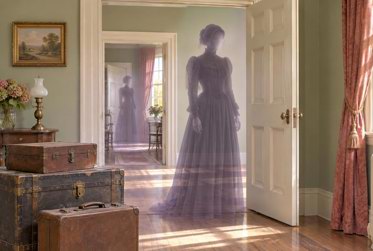
The father had already been home once that morning. He had gone back to collect a tool from the garage of the family’s Kailua house and found the television blaring in the otherwise empty building. He switched it off and returned to work. Later, an uneasy feeling prompted him to send one of his sons to check the house again. This time, the son found smoke coming from a bedroom window.
According to Gordon Morse’s report in the Honolulu Advertiser of 5 February 1964, the son’s key would not fit the lock. He broke in through a kitchen window. Firefighters confined the blaze to a clothes closet, but somebody’s clothing was lost. The family had already been reporting knocking walls, doors opening and window shades moving. Now the disturbance had acquired a dangerous new form.
The account was reprinted that spring in the Journal of Borderland Research. It quotes Captain Jonah Wise of the Kailua fire station saying the house had been locked and empty and that investigators had found neither faulty wiring nor spontaneous combustion of flammable materials. The recorded cause remained undetermined. The family also reported a recent car fire in the garage.
Read the contemporary reprint on page 23 of the journal
When a house stops feeling safe
The sequence makes this Hawaiian account particularly unsettling. The early disturbances concerned the familiar boundaries of a home: the walls around its occupants, a door meant to remain closed, the shades over its windows. The fire brought the threat into a place where belongings were stored. A wardrobe or clothes closet is ordinarily somewhere things can be put away and left alone. In this story, leaving the house did not bring the trouble to an end.
Knocking can make people sit awake. A moving object can make them reconsider what they have just seen. They can check a latch, ask another person to watch or move to a different room for the night. A fire demands an immediate response, whatever someone believes about its origin. The household ceases to be merely uncomfortable and becomes a place that may need watching even when nobody is there. Morse’s account catches that change in the father’s concern about what might be happening while he was at work.
The reporting does not give the family a surname, and there is no need to fill that absence with a borrowed identity from another Hawaiian haunting. What survives is a compact record of people trying to live around a disturbance, followed by a call to the fire department. It belongs to a wider group of accounts in which a noisy presence appears to become capable of burning the things around it.
These are often called fire poltergeists. The term describes the way the incidents were experienced: repeated disturbances, sometimes including knocks or moving objects, accompanied by small outbreaks of fire. It is the repetition that changes the feeling of the house. An extinguished flame does not necessarily restore confidence when another item may be the next to burn.

A dictionary in the wood box
Ten years before the Kailua report, a family in Flatrock, Newfoundland, described fires starting among their possessions. Robert Hiscock’s reconstruction follows contemporary newspaper coverage of Mike Parsons, his wife and their daughter Josephine. The first reported incident involved a dictionary burning in a wood box while the dry sticks and boughs beside it remained untouched.
Other objects followed, including a sack of sugar, religious books, a doll and a trunk. Josephine described finding the sugar sack burning in the front room. Her father said the flames went out when he touched it. The family became afraid to sleep, uncertain what might ignite while they were in bed.
Parsons also spoke about what the house contained: food grown through a summer’s work, stored in the basement. He said there was no insurance payment to be gained from losing it. His objection was grounded in the things his family depended upon, rather than an elaborate account of the presence itself.
The RCMP investigated. A newspaper follow-up reported that officers had found no proof of the fires’ origin, though they had reached conclusions that the brief notice did not spell out. The surviving coverage leaves those conclusions unspecified.
There is a particular vulnerability in the objects named in this case. A dictionary, a child’s doll, books and food are not the machinery of an industrial fire. They belong to the ordinary arrangements of family life. That is why an account of several small fires can be more disturbing than the scale of the damage alone might suggest. The next outbreak seems capable of beginning among almost anything.
Kailua and Flatrock also place the family’s working day inside the story. In Hawaii, the father had gone back for a tool. In Newfoundland, the family’s recollections concern housework, farm work and stored provisions. The strange events interrupt practical lives. The people involved have jobs to get back to, possessions to preserve and no easy way to watch every part of a home at once.
A warning in Amherst
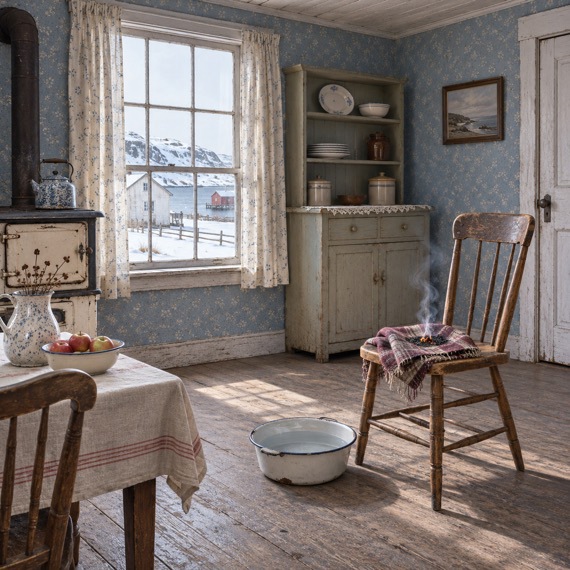
At Amherst, Nova Scotia, the alleged presence did more than start fires. In Walter Hubbell’s 1879 account, it announced that it intended to do so. Esther Cox was living with her sister Olive and Olive’s husband, Daniel Teed, when the household began reporting violent knocks and other disturbances. Hubbell, an actor who later boarded with the family, turned the case into The Haunted House.
He relates that Esther heard a voice warning that the house would be burned. The family discussed the threat, and a lighted match reportedly fell onto the bed. More followed over the next several minutes. They were extinguished before they could take hold. The warning had become something the people in the room needed to act upon.
Hubbell then describes a dress belonging to Esther being rolled up and moved under a bed, where it burst into flame. It was put out. The following morning brought the anxiety that would run through the later Hawaiian account as well: a fire might begin somewhere nobody could reach in time. The feared location in Amherst was a hidden part of the building, where a small blaze could become a house fire before the occupants understood what was happening.
A few days later, in the book’s telling, Olive saw smoke rising from the cellar while she was working in the kitchen. She took water downstairs and found a barrel of shavings burning. Her first attempt did not extinguish it. She and Esther went outside calling for help, and a passing man entered the cottage and put the fire out.
Hubbell records disagreement within the community about who or what was responsible. The family attributed the disturbances to a ghost, while fire marshals suspected Esther. Later, after a separate barn fire, she was convicted of arson. Hubbell continued to defend her. The conviction is part of her history, alongside the earlier household accounts, and cannot simply be removed from the story.
What makes the Amherst narrative distinctive is the relationship between the reported threats and the fires. The household believed it was dealing with a presence that could explain what it wanted, then act upon it. At one point, according to Hubbell, Esther said she had to leave because the ghost threatened to burn the roof. Another household agreed to take her in. Fear of fire became a decision about where a young woman could sleep.
After the flames are out
The three cases give very different shapes to the same domestic fear. Amherst has a threatening voice and a named central figure. Flatrock has successive objects burning during a family’s daily life. Kailua has a house already troubled by knocking, followed by smoke discovered during an anxious return visit. Their similarities do not erase the details that make each account its own.
Nor does the phrase fire poltergeist necessarily mean a person was seen producing flames. In these stories the unsettling presence is usually inferred from a sequence of events. The occupants know where they found the fire, what they remember doing beforehand and what else has been happening in the house. The unseen part is how the flame began. That absence can become the centre around which the rest of home life turns.
There is also an important difference between the blaze being extinguished and the experience being over. A fire crew can put out a closet fire. A neighbour can smother burning shavings. Those actions deal with the immediate emergency. For a family already living with repeated disturbances, the harder question is whether they can go back to treating their belongings as ordinary, harmless things.
The Kailua account ends with damage contained, rather than a house destroyed. That limited ending is part of its force. The family still had a home to return to, with its rooms, its doors and the television the father had turned off that morning. What had changed was their confidence in leaving it alone. A noise in a wall might once have sounded like an irritation. After the closet burned, another knock could carry a different weight.
Further Reading
Walter Hubbell’s The Haunted House
Esther Cox and the Great Amherst Mystery
Reports of uncanny fire and supposed pyrokinetic abilities feature in Feuerhand. Join Mysterious Universe Plus+ at the Max tier to stream the episode and explore the available back catalogue of strange encounters.
Trending Podcasts
-
 36.13 I MU Podcasts
36.13 - MU Podcast - MU Interviews - Charlie Robinson - 002
-
-
-
 36.14 I MU Podcasts
36.14 - MU Podcast - The Tayos Caves Mystery Part 1
-
 36.16 I MU Podcasts
36.16 - MU Podcast - Beneath the Pyramids
-
 36.19 I MU Podcasts
36.19 - MU Podcast - MU Interviews - Joshua Cutchin - 003

Rowan Ashford covers strange creatures, hauntings and local legends. He takes a particular interest in older reports and the details that disappear as stories pass from one teller to the next.
Previous article