



Nov 12, 2026 I Elias Mercer
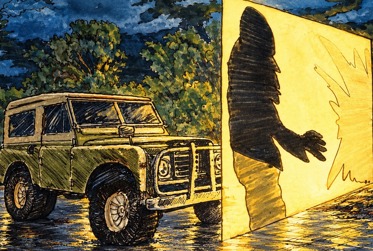
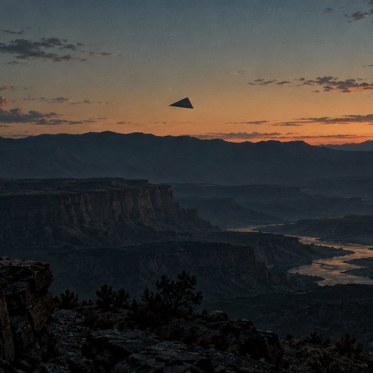
The young people driving along the Nova Scotia shore thought they had seen an aircraft in trouble. A horizontal row of yellow lights was descending towards the water near Shag Harbour. For a few seconds a hill blocked their view. When they could see the harbour again, there was a solitary white light on the surface, approximately where they expected the object to have come down. They drove on far enough to report it to the Royal Canadian Mounted Police.
That night, October 4, 1967, became one of Canada's most enduring UFO stories. At its beginning, however, the concern was immediate and familiar. An aircraft might have crashed close to shore. People could be in the water. Officers, fishermen and the Coast Guard went to look, and navy divers searched in the days that followed. No wreckage was recovered. The response was real; the disaster it appeared to require remained elusive.
There is a particular kind of strange encounter in which the first mystery is postponed by the need to help. A low aircraft disappears behind houses, a flash is followed by a tremendous bang, or a light seems to settle on the sea. Witnesses begin with a reasonable expectation of what must happen next. Only later does the absence become troubling: no damaged machine, no missing flight, no obvious place where the thing they watched could have gone.
One of Shag Harbour’s most absorbing records was assembled close to the event. Investigator Norman Levine, working for the University of Colorado’s UFO study, telephoned Canadian naval and RCMP personnel. Case 34 preserves the night through their accounts: lights seen from different roads, the glow on the water and boats gathering to search the place where something seemed to have come down.
A naval watch officer told the project that an object about sixty feet long, carrying four lights, had descended with a whistling noise. In that version, it flashed on impact and left a white light on the water. The RCMP corporal's account was more specific about the young motorists' sightline. There had been three or four lights, then a gap of roughly ten seconds behind the hill, followed by the white light offshore. The apparent water entry joined two observations separated by an obstruction.
The hill gives the motorists’ experience an uneasy pause. They saw the lights descending, lost them briefly behind the rise and then found a white light on the water where they expected the object to be. Within those hidden seconds, the encounter changed from an unfamiliar sight in the sky into a possible emergency in the harbour. They drove on to find help.
The police arrived while the white light was still visible. According to the corporal, two officers and he reached the shore about fifteen minutes after the first report, and the light remained for approximately five minutes more. It seemed to move with the ebbing tide. He was clear that it was not on a boat. By the time officers reached the area in a rowboat, it had gone out. A Coast Guard vessel and six fishing boats were also searching.
They found patches of foam, described as thirty to forty yards across. Fishermen considered the foam unusual. The presumed impact area lay between an island and the mainland, only a few hundred yards offshore. Here the scale of the response and the smallness of the search area make the account especially striking. People were not searching an unspecified ocean for a distant rumour. They had gathered around a place where a light had recently been seen.
Other observers supplied their own fragments. Two young women driving on the island reported three yellow lights tilting and descending before a yellow light appeared on the water. A witness about two miles away saw three red-orange lights in a horizontal line, moving downwards at what he considered aircraft speed. He heard a whistle resembling a falling bomb. Houses then blocked his view, and the sound stopped a second or two later.
The viewpoints give the night a sense of movement beyond any one witness’s reach. From a road, lights tilt and descend. Beyond houses, a whistling sound accompanies another view. At the shore, a light remains on the water. The gathering accounts keep returning to a small stretch of harbour where an object appeared to have arrived, yet where searchers could find nothing to recover.
The night was clear and moonless, according to the information supplied to Levine. Air search and rescue had no missing aircraft report. A nearby RCAF radar station reported neither unusual radar objects nor Canadian or American air operations in the area at the relevant time. Navy divers found nothing relevant during the following days. Five days after the incident, Naval Maritime Command told the Colorado project the search had ended.
Levine also preserved a fishing captain’s account of lights and radar returns about 175 nautical miles away, treating it as a separate episode. The harbour encounter retained its own concentrated setting: officers and fishermen converging on a light that had gone out before they reached it. Their search remained close to shore, in waters where an aircraft’s arrival should have left something to find.
A mountain brought the rescuers out
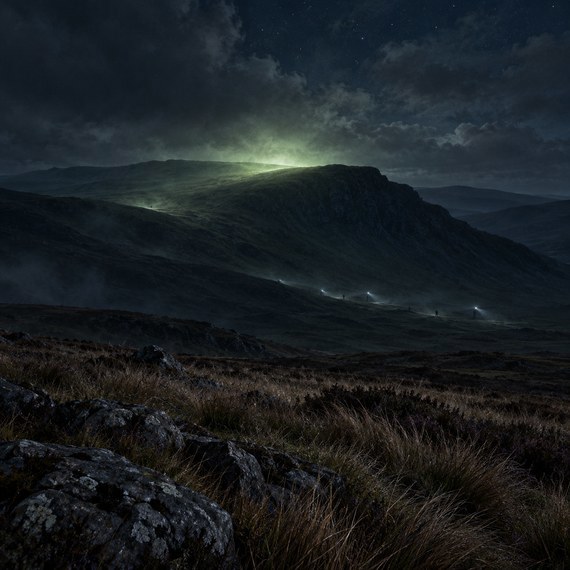
In North Wales, six years later, the search began with a noise rather than a view of a descending aircraft. On January 23, 1974, a powerful bang and rumbling alarmed people around the Berwyn Mountains. Police checked aviation authorities and treated the situation as a possible crash. Officers went onto the mountain, and an RAF rescue team was mobilised. Lights had also been reported. The searches found no wreckage.
Seismologist Roger Musson later reconstructed the night's records, including the police incident log. A magnitude 3.5 earthquake had occurred at about 8.38 pm. His account also separates a bright meteor display from the tremor and from later light reports. The documented earthquake belongs in any telling of the night. So does the practical uncertainty of the first responders, who had to make decisions before the various observations had been sorted out.
Nurse Pat Evans was among those who went towards the mountain believing somebody might need help. In a 2008 newspaper interview, she rejected later accounts which placed alien bodies in her path or claimed officials had stopped her. She described going out after the tremendous disturbance because she thought an aircraft had crashed. She recalled a huge pulsating orange ball near the top of the mountain, with smaller lights flashing about it. Her two teenage daughters went with her, and the three eventually turned back without offering the first aid they had intended to provide. Her response restores a human purpose to a night often told mainly through its supposed secrets. She went because she was a nurse.
A feature in The Great Outdoors in October 2026 returned to Berwyn and its enduring reputation. More than half a century after the alarm, the landscape still draws people back to the bang and strange lights. The rescue effort ended without a wreck, but the mountain kept its place in the history of unexplained encounters. The original urge to go and look has proved remarkably persistent.
The plane above the factory
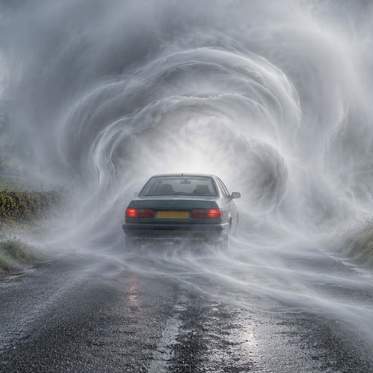
At Barnoldswick, the feared disaster lasted only as long as a low-flying aircraft remained in sight. The Craven Herald reported in January 2004 that retired policewoman Moira Thwaites and her husband Malcolm Spensley had seen what resembled a grey, four-engined bomber near the Rolls-Royce Bankfield site. It appeared so low that they feared it would strike nearby houses. Then it was gone. They had heard no engine noise.
The newspaper returned to the subject in February 2006 after another man reported a Lancaster-like aircraft near Gargrave, again apparently without sound. Suggestions of modern transport-aircraft training flights accompanied the reports. What remains compelling in the earlier couple's account is the abrupt change from concern about a machine approaching rooftops to the absence of the expected accident. The apparent aircraft gave them a recognisable danger; its disappearance removed the event that should have followed.
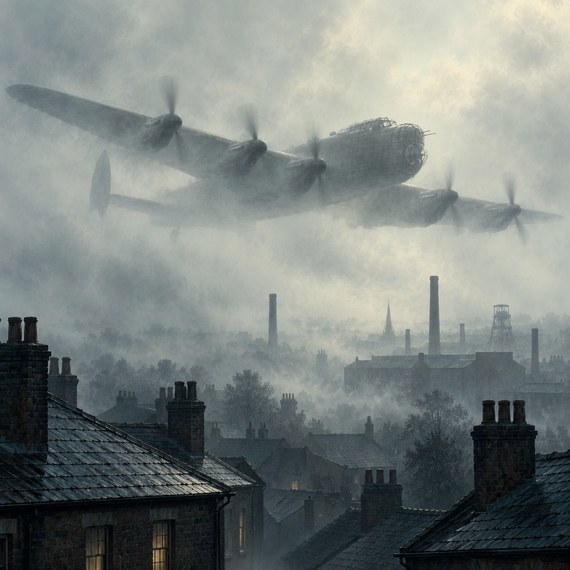
A mountain, a harbour and a low aircraft above factory buildings offer different settings for the same unsettling reversal. People recognise a danger and prepare for its consequences. Then the expected disaster fails to materialise. The measured earthquake at Berwyn, the waterborne light at Shag Harbour and the silent bomber near Barnoldswick give each its own character, while the search for a missing machine runs through them all.
The search becomes part of what makes these encounters linger. Divers enter the water where a light was seen; a rescue team goes onto a mountain; witnesses wait for news of an aircraft they feared would strike houses. These are practical responses to something that felt immediate and real. When they end without wreckage, the people involved are left with a scene they remember and a resolution that never arrived.
In most crash stories, wreckage eventually fixes the event to the ground. It gives the witnesses' alarm a location, a machine and a sequence of consequences. These accounts preserve the moment before that resolution, then leave it there. The light goes out before the boats arrive. The mountain has nothing for the search parties to recover. A bomber seems about to reach the houses and never does. People went looking for something they believed had fallen into their world, and came back without it.
Further Reading
- Colorado UFO study, Case 34
- The enigmatic Bala earthquake of 1974
- Pat Evans’s account of the Berwyn search
- The Berwyn Mountains revisited
- Barnoldswick phantom bomber reports
For more encounters with aircraft that seem to belong to another world, listen to the phantom-plane discussion in the Plus+ extension of Mysterious Universe episode 21.19. Join Mysterious Universe Plus+ at the Max tier to stream the extended episode and explore the available back catalogue.
Trending Podcasts
-
 36.13 I MU Podcasts
36.13 - MU Podcast - MU Interviews - Charlie Robinson - 002
-
-
 36.14 I MU Podcasts
36.14 - MU Podcast - The Tayos Caves Mystery Part 1
-
-
 36.16 I MU Podcasts
36.16 - MU Podcast - Beneath the Pyramids
-
 36.12 I MU Podcasts
36.12 - MU Podcast - The Skill Trap | Outsourcing Ourselves

Elias Mercer writes about unexplained phenomena, unusual encounters and the stories that gather around mysterious places. His features connect contemporary reports with older accounts, exploring the details that make them worth remembering.
Previous article